

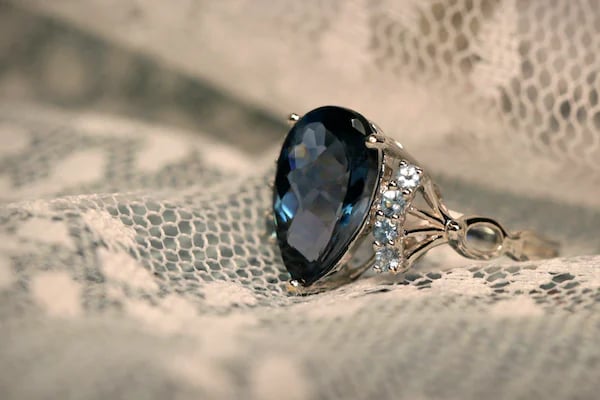
Sapphire is one of the valuable minerals in the Corundum family; it gets its distinctive blue hue from traces of specific oxides. The most popular gemstones in jewelry, along with rubies and emeralds, are sapphires.
The term is derived from the Hebrew word "chapter," which means "neat" and is pronounced "safer."
Despite coming in a variety of hues, including translucent, yellow, orange, pink, and numerous creative combinations, their more well-known blue variety is a result of its chemical makeup, Aluminum Oxide (Formula Al2O3).
As the second-hardest mineral (sapphire rates a 9 on the Mohs scale), it is also the heaviest (weighing between 3.90 and 4.10) due to the minerals that make up the stone: aluminum, iron, and titanium.
Sapphires are created deep inside the lithosphere, frequently in magmatic rocks.
There are deposits in Burma, India, Thailand, Australia, Nigeria, Brazil, Colombia, Tanzania, the United States, and Vietnam in addition to Africa, which is where the majority of the production occurs. Although there are significant quantities of this mineral in Antarctica, its exploitation has been kept to a minimum so as not to compromise the area's delicate biological balance.
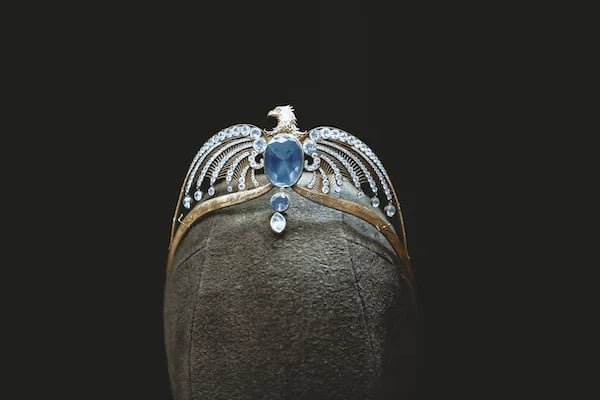
Synthetic
In the 1940s, production of its synthetic replica started in the United States, producing an incredibly convincing facsimile at a far reduced price. The method entails melting fine alumina powder in a sizable flame of explosive gas. Alumina gradually accumulates in the form of this mineral's tear substance. Because these synthetic sapphires resemble genuine sapphires so closely in terms of appearance and quality, assistance from a professional is required to tell natural sapphires from synthetic ones.
CHARACTERISTICS OF QUALITY
Similar to other precious stones, a gemstone's worth and price are mostly determined by factors including color, transparency, size, and size quality.
The deep blue with a violet tint is regarded as the best color for sapphires, while the blue with a somewhat grey tone is the second most valued. The level of purity is another crucial factor. The sapphire's inclusions significantly reduce its value. When confirmed as having not been treated, sapphire gains a substantially higher value, similar to what happens with rubies.
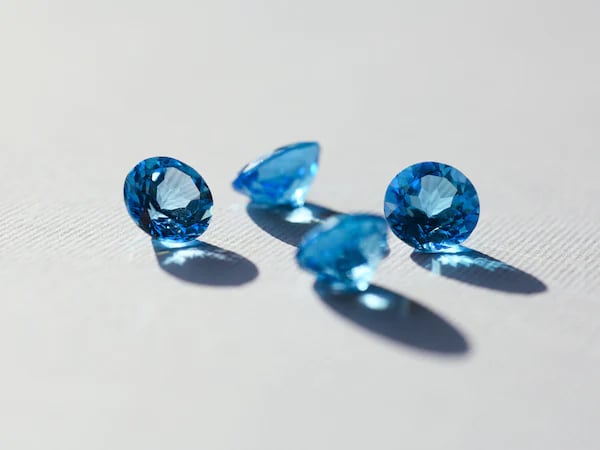
Star Sapphires
The American Museum of Natural History currently holds a 563,35-carat sapphire.
The Midnight Star is a 116.75-carat deep purple-violet star sapphire that was found in Sri Lanka over 300 years ago.
The Star of Artaban, which weighs 316 carats, and the Star of Asia, which weighs around 330 carats each, are both located in Washington.
The Logan Sapphire, a 423-carat gemstone, may be found in Washington, D.C., at the Smithsonian Museum of Natural History.